
Plenty of people put off seeing the dentist because they’re nervous, sometimes for years at a time. A study published in the Journal of the American Dental Association in September 2025 found that nearly 73 percent of U.S. adults have some fear of going to the dentist. About 27 percent described their fear as severe.
Fear tends to grow the longer you stay away. A visit you’ve put off for years can start to feel much bigger than it is. Patients who once felt the same way often say their first visit back was easier than they expected, and you can read some of their experiences on the Patient Reviews page.
You have more options than you might think, and some of them don’t involve medication at all. Here’s what you can ask for, how the two most common types of sedation work, and what to ask before your appointment.
Comfort Options at the Dentist That Don’t Involve Sedation
You don’t need sedation to ask for a gentler visit. Many dental offices offer these comforts if you ask:
- A signal to pause. Agree on a hand signal before treatment starts, and the dentist stops when you raise your hand.
- Numbing gel. A topical gel applied before an injection makes the needle easier to tolerate.
- Headphones. Music, a podcast, or a show gives you something else to focus on.
- Breaks. Short pauses during a longer appointment let you rest your jaw and catch your breath.
- Step-by-step explanations. Knowing what’s happening, and what you’ll feel next, takes away much of the guesswork.
If a past visit was hard for you, it can help to share what happened so the team knows what to avoid. Consider mentioning that you’re nervous when you book, and tell your dentist again once you’re in the chair. Both steps give the team a chance to plan your visit around what will help you feel more comfortable.
Nitrous Oxide (Laughing Gas): How It Works and How It Feels
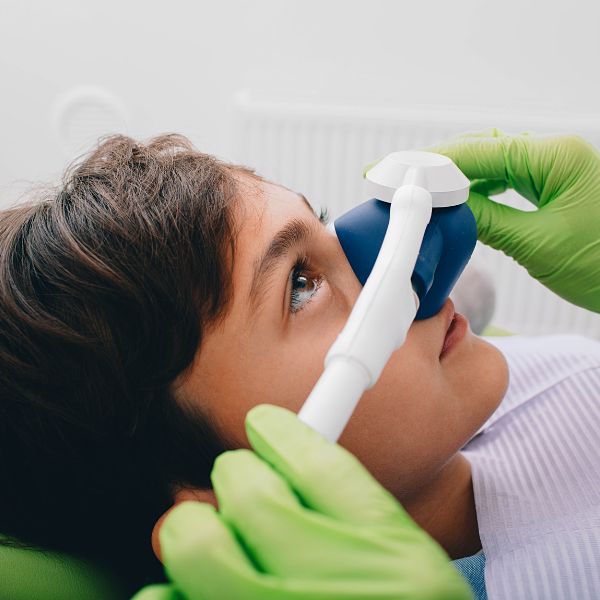
Nitrous oxide is a gas mixed with oxygen that you breathe through a small mask over your nose. It’s often called laughing gas, though most people don’t actually laugh. It’s meant to help you relax, not to put you to sleep. You stay awake and can talk with your dentist the whole time. You breathe normally, and your dentist can adjust the amount during treatment if you’d like to feel more or less of the effect.
Many patients feel light-headed or notice a tingling or heavy feeling in their arms and legs. Most describe feeling calm. According to the American Dental Association (ADA), the effects usually wear off soon after the mask comes off. Many offices let patients drive themselves home after nitrous oxide, but confirm that with your dentist before your visit.
Oral Sedation: What to Expect From a Sedation Pill
Oral sedation is a prescription pill, usually taken about an hour before your appointment. Your dentist will tell you exactly when to take it. It brings a deeper level of relaxation than nitrous oxide. Many patients feel drowsy and noticeably less anxious. You stay awake and can respond to your dentist, though some people remember little of the appointment afterward.
The effects last longer than nitrous oxide, so you’ll need someone to drive you to and from your appointment. Drowsiness can last for several hours, so plan on a quiet day at home. Your dentist will tell you whether to avoid food or drink beforehand and will check on you throughout the appointment. Wear comfortable clothes, and arrange for your driver to stay with you for a while once you’re home.
Nitrous Oxide vs. Oral Sedation at a Glance
Nitrous oxide is the lighter of the two options. It wears off soon after the mask comes off, and many patients can drive themselves home. Oral sedation offers deeper relaxation for significant anxiety or longer appointments, but the drowsiness lasts for hours, and you’ll need someone to drive you.
What About IV Sedation or General Anesthesia?
Deeper levels of sedation, such as IV sedation or general anesthesia, are available at some dental offices and specialty practices. They require advanced training, more preparation, and closer monitoring, and many general dental offices don’t offer them. If you think you need deeper sedation, ask your dentist whether a referral makes sense. Oral surgeons and dentist anesthesiologists are among the providers who offer these deeper options.
Is Sedation Dentistry Right for Me?
Sedation often suits people who:
- have significant dental anxiety or fear
- have a strong gag reflex
- need a longer appointment or several procedures in one visit
- had a difficult dental experience in the past
Your health comes first. Before recommending sedation, your dentist needs your full health history and a list of every medication and supplement you take. Some health conditions and medications affect which options your dentist can offer. The New Patient Registration Forms page includes a health history form you can fill out before your visit. Bring your medication list to the appointment as well.
If staying away has led to a toothache or swelling, you don’t have to wait until you feel ready for a routine visit. The Emergency Dental Care page explains what to do and how to get seen.
Questions to Ask Your Dentist About Sedation
Bring these questions to your consultation, or ask them when you call to book:
- Which sedation options do you offer?
- Which option would you recommend for my treatment, and why?
- Will I need someone to drive me home?
- Can I eat or drink before my appointment?
- How long will the effects last, and when can I return to work or my usual activities?
- Does my insurance cover sedation, and what will I pay if it doesn’t?
- Can I use comfort options, such as a hand signal or headphones, along with sedation?
If it helps to know who you’ll be seeing, the Meet Our Doctors page introduces the dentists.
Feeling nervous about the dentist is common, and it doesn’t have to keep you away. Between simple comfort options and sedation, there’s likely an approach that makes a visit feel manageable. The first step is letting the office know how you feel.
South Sound Dental Care offers both nitrous oxide and oral sedation. When you call (253) 473-4303 to book, let the team know you’re nervous so they can plan your visit with that in mind.